

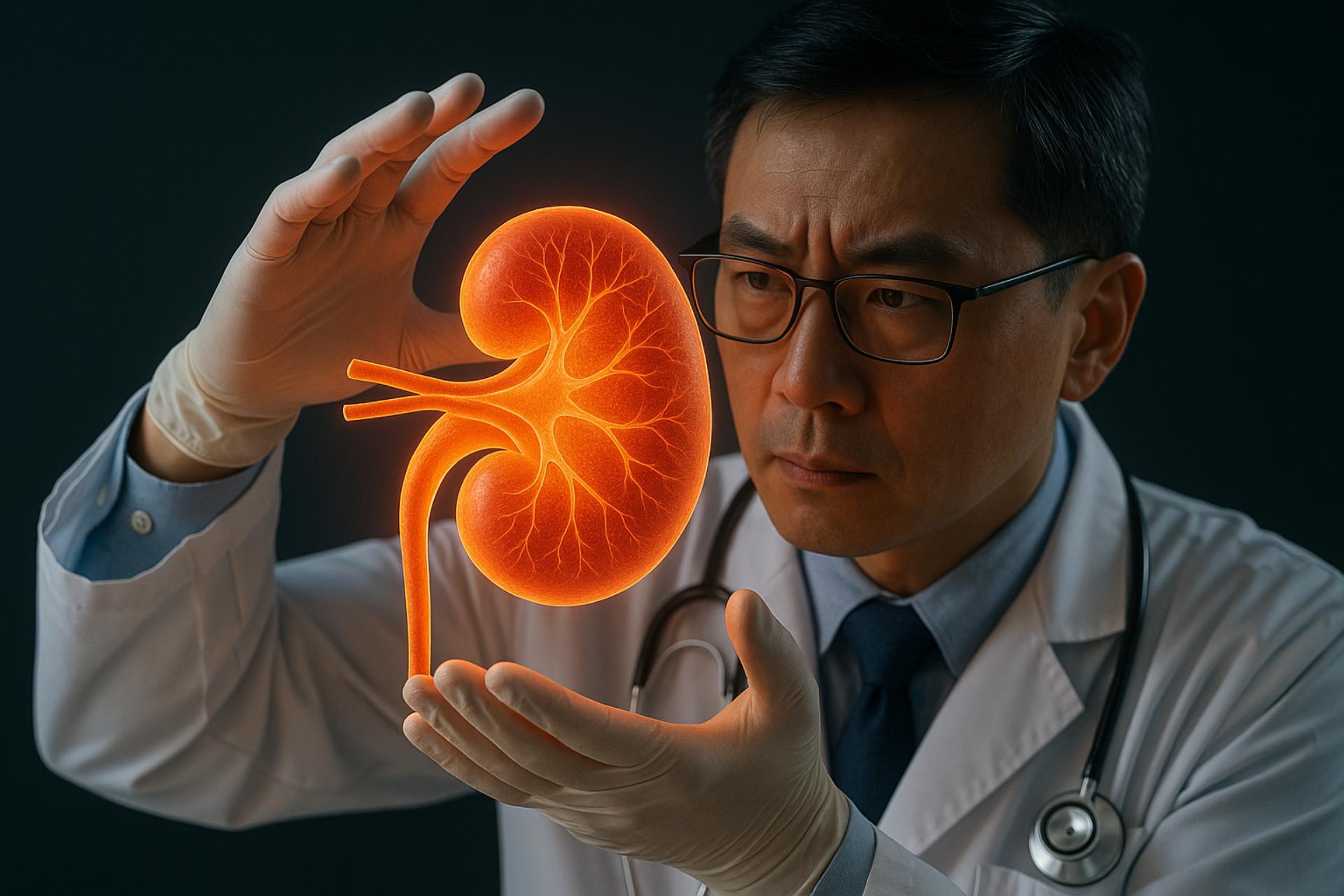
Breakthrough in Regenerative Medicine: Lab-Grown Human Kidney Brings New Hope for Transplants
In a quiet laboratory nestled within the biomedical research hub of Shanghai, a team of Chinese scientists has inched humanity closer to an audacious dream: growing fully functional human organs outside the body. Their focus—a human kidney, the body’s natural filtration system—has long been one of the most elusive targets in regenerative medicine. But what they’ve created isn’t a model, a simulation, or a proof of concept. It’s a living, bioengineered organ, pulsing with promise and performing the core tasks of a real kidney—filtering blood, balancing electrolytes, and even producing urine.
The process begins with stem cells, capable of becoming any type of tissue. These cells are guided to form kidney organoids—primitive versions of kidneys—then carefully seeded onto a biodegradable scaffold. The scaffold, built from hydrogel materials that mimic the pliable texture of living tissue, supports the development of intricate vascular structures. Over time, the organoid tissue matures into functional units: glomeruli that begin filtration, tubular systems that transport fluids, and a branching network for collecting and removing urine-like waste.
But the most breathtaking result came when this engineered organ was connected to an artificial circulatory system. For more than 60 hours, the lab-grown kidney filtered synthetic blood, effectively separating waste while returning clean plasma to the loop. It even responded to hormones like ADH and aldosterone—subtle chemical messengers that control water and salt balance—just as a real kidney would. This is not just cellular mimicry; this is organ-level behavior.
The implications are profound. Across the world, nearly 850 million people suffer from chronic kidney disease. Many depend on dialysis, a grueling and imperfect substitute. Others wait in vain for donor kidneys, caught in a system strained by shortages and the risk of immune rejection. A lab-grown kidney, especially one built from a patient’s own cells, could eliminate those risks and erase the transplant waitlist altogether.
While human trials are still on the horizon, with animal testing currently underway, researchers estimate that early-stage clinical applications could begin within the next decade. The road ahead is long and filled with complexity—ensuring long-term function, safe integration into the human body, and scalable production remain monumental challenges. Yet this breakthrough marks a moment of quiet revolution, where science steps closer to reshaping what it means to heal. The future of organ transplantation may no longer lie in the search for donors—but in the precision of a petri dish.